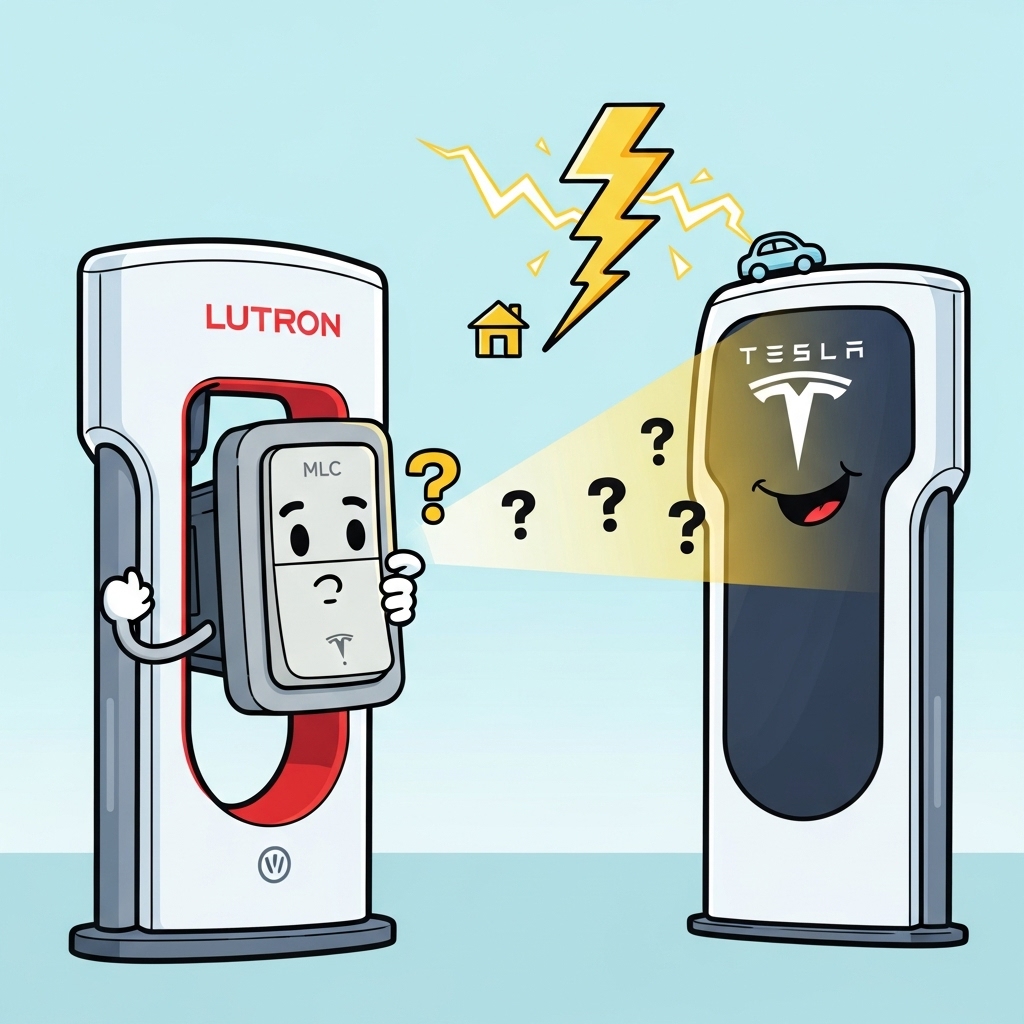
Smart home enthusiasts 🏠 are always looking for ways to connect their lighting systems with electric vehicles like Tesla 🚗. The Lutron MLC (Maestro Low-Voltage Companion) is a popular device for managing lighting loads efficiently 💡, but many users wonder if it can integrate with Tesla’s smart features or charging systems 🔋. In this guide, we’ll break down exactly how Lutron MLC works, what it’s designed for, and whether it’s compatible with Tesla’s ecosystem — including Wall Connectors, Powerwall, and the Tesla app. You’ll also learn about practical alternatives, wiring considerations, and automation options 🔧 that bridge the gap between Tesla and Lutron systems.
Introduction
⚡ Does Lutron MLC Work With Tesla? That’s one of the most common questions among smart home enthusiasts 🏠 and Tesla owners 🚗 looking to create a seamless automation experience. The Lutron MLC (Maestro Low-Voltage Companion) is widely used to control low-voltage lighting loads efficiently 💡, but many wonder if it can connect directly or indirectly with Tesla’s ecosystem — from the Wall Connector 🔋 to the Powerwall ⚙️ and even the Tesla app 📱.
In this 2025 compatibility guide 🧭, we’ll explore how the Lutron MLC actually works, what type of circuits it supports, and why it differs from smart switches and motion sensors that natively support automation protocols like Zigbee, Z-Wave, or Matter 🔄. Understanding these differences is key to knowing whether the MLC can respond to or control Tesla-related devices in your home energy network.
We’ll also cover creative solutions and alternatives 🔧 — including how to pair Lutron’s Caséta or RadioRA systems with Tesla-compatible hubs, how motion lighting can complement EV charging routines, and what to consider in terms of power load, relay wiring, and low-voltage safety 🧰. Even though the Lutron MLC itself isn’t a “smart” module, it can still play a role in a broader automation setup when used with companion dimmers, sensors, or smart relays.
So, if you’re trying to make your Tesla charging area brighter 💡, automate lights as your car parks 🚘, or optimize energy efficiency at home ⚡, this guide will walk you through every step. Let’s explore what’s possible — and what’s not — when it comes to integrating the Lutron MLC with Tesla technology in 2025 🔍.
Main
🔍 Understanding What Lutron MLC Really Is
The Lutron MLC (Maestro Low-Voltage Companion) is often misunderstood as a “smart” lighting controller 💡, but in reality, it’s a companion device designed to work with a primary Maestro switch or dimmer. Its main function is to help control low-voltage lighting loads — such as LED fixtures or electronic transformers — without flickering or misfiring issues.
Unlike Caséta or RadioRA devices, the MLC doesn’t include wireless connectivity or smart integration protocols. That means it cannot directly communicate with cloud platforms, Wi-Fi networks, or IoT systems like Tesla’s ecosystem 🚗⚙️.
⚡ Can Lutron MLC Connect With Tesla Devices?
Here’s the short answer: No, the Lutron MLC cannot directly work with Tesla devices. It’s a low-voltage companion, not a networked controller. Tesla’s ecosystem — including the Wall Connector, Powerwall, and Tesla App — relies on data communication and automation APIs, while the MLC operates purely on electrical control lines.
🧩 However, Integration Is Still Possible — Indirectly
Although the MLC itself lacks smart capabilities, it can still be part of a connected setup through a bridge or automation hub that supports both Tesla-compatible systems and Lutron devices. Here’s how:
- Use a Lutron Caséta or RadioRA 3 hub to control lighting circuits associated with the MLC companion.
- Integrate Caséta or RA3 with a home automation platform such as SmartThings, Home Assistant, or Apple HomeKit 🏠.
- Connect Tesla’s data (charging status, arrival events, energy use) to that same automation platform using a Tesla integration plug-in 🔋.
- Create automation rules that trigger lighting based on Tesla events, like turning on garage lights when charging starts or when the car arrives 🚘.
🔧 Practical Setup Ideas
- Garage Lighting Automation: When your Tesla starts charging, lights turn on automatically for better visibility.
- Energy Optimization: Pair your lighting circuits with Tesla Powerwall data to reduce grid usage during peak hours ⚙️.
- Arrival Detection: Use Tesla presence data to trigger exterior or pathway lights when approaching home 🌙.
- Night Charging Mode: Dim or turn off certain lights once charging is complete, reducing unnecessary power use.
⚙️ Wiring and Compatibility Notes
Before trying to integrate the MLC into a smart system, it’s crucial to understand its electrical limitations:
- The MLC is not a standalone dimmer or switch — it must be paired with a compatible Maestro device.
- It supports low-voltage loads only (typically electronic transformers or LED drivers).
- Wiring must follow Lutron’s specifications to prevent load flicker or switch failure ⚠️.
- Always ensure that neutral and traveler wires are properly connected for multi-location setups.
💡 Alternatives for Smart Integration
If your goal is to combine lighting and Tesla automation, consider using smarter Lutron products or other smart switch brands that natively support automation:
✅ Recommended Options
- Lutron Caséta Smart Switches — compatible with Alexa, Google, and Apple HomeKit.
- RadioRA 3 — offers advanced automation scenes and more integration flexibility.
- Smart Relays like Shelly or Aqara — ideal for direct control via Home Assistant or SmartThings.
- Home Assistant + Tesla Integration — allows event-based triggers and power monitoring 🔋.
🔚 Conclusion: Does Lutron MLC Work With Tesla?
In summary, the Lutron MLC doesn’t natively integrate with Tesla devices 🚗, since it’s not a connected or programmable switch. However, when combined with Lutron hubs or third-party automation platforms, it can still contribute to a smart environment that reacts to Tesla events, energy flows, or charging status ⚡.
For true automation, pairing MLC circuits with Caséta, RadioRA 3, or a home automation hub is the most reliable path. That way, you can enjoy a synchronized and energy-efficient setup that bridges lighting, motion sensors, and Tesla technology — all working together for a smarter home 🏠✨.
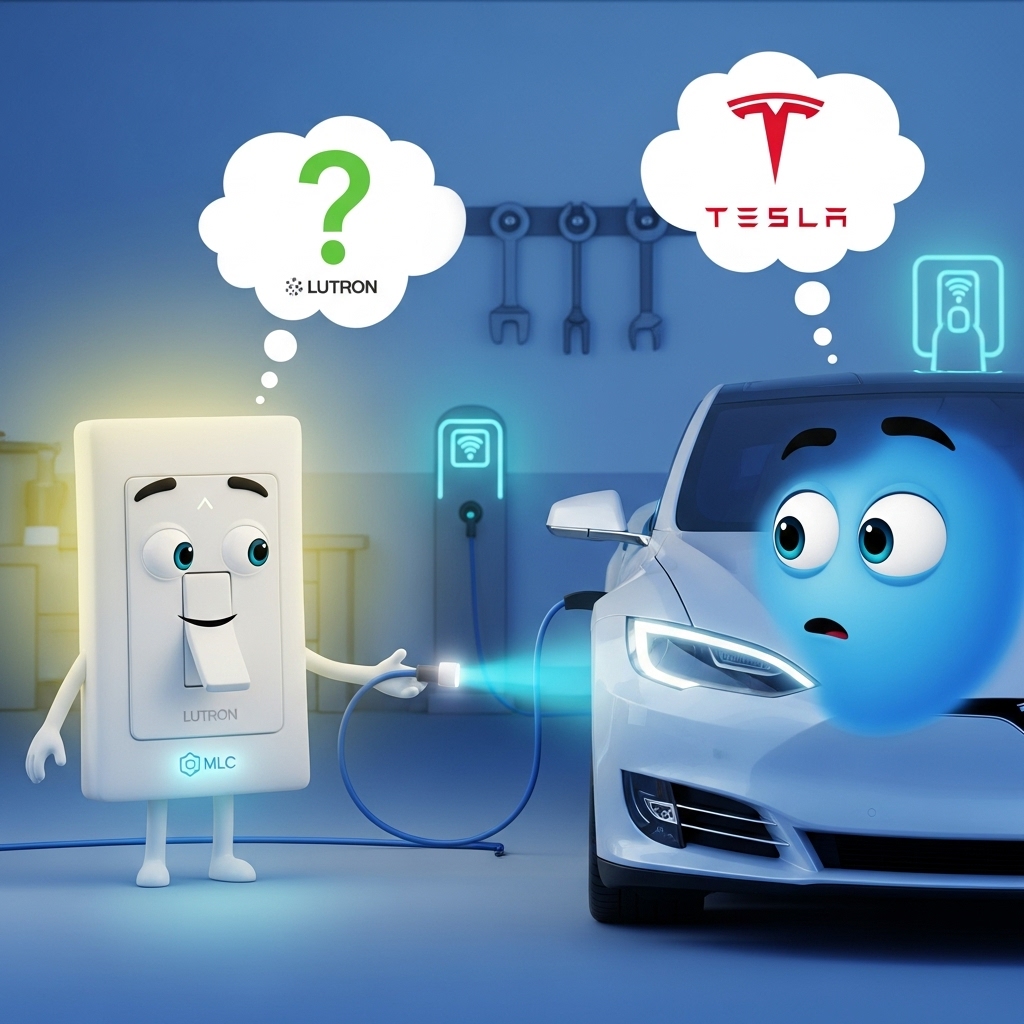
Table of contents
Editorial Process
Warning
Tags